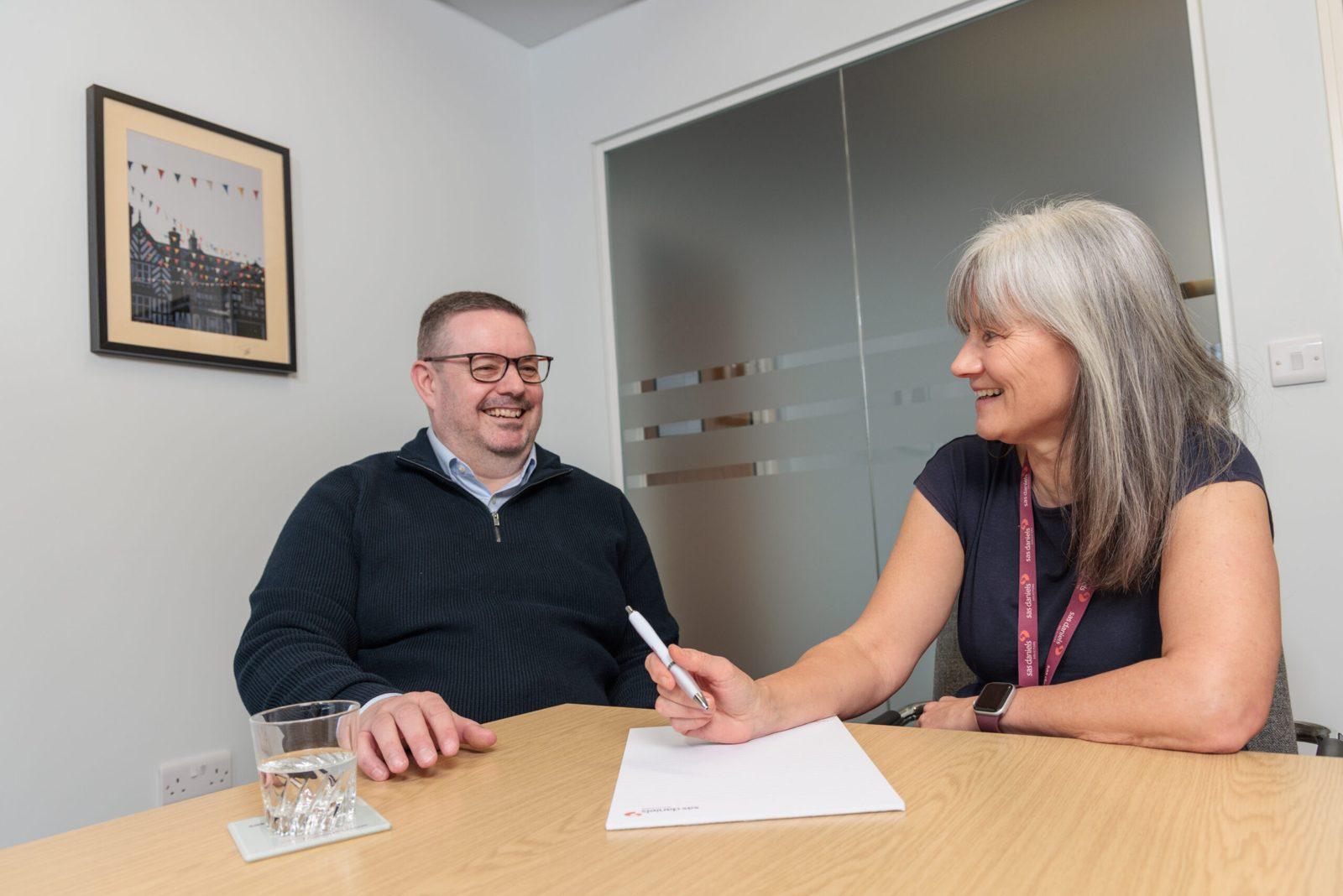

SAS Daniels
SolicitorsMacclesfield +1
Wills, powers of attorney, Court of Protection and care funding
Team favourite

Legal decisions, in place in good timeRegulated by the Solicitors Regulation Authority

A solicitor who specialises in later life helps families put the right legal arrangements in place, ideally while the person can still make their own decisions. It is one of the most useful things a family can do early, and one of the hardest to put right late.
Chosen attorneys can make decisions if the person no longer can.
Arrangements made early avoid the cost and delay of court.
Solicitors are regulated by the SRA, with a formal complaints route.
Solicitors are regulated by the SRA and must carry insurance. Will writers who are not solicitors are not regulated by the SRA.
Check a solicitor on the SRA register (opens in a new tab)Lets chosen people manage money, bills and property. It can be used, with permission, while the person still has capacity.
Lets chosen people make decisions about care, treatment and where someone lives, only once they cannot decide for themselves.
Making or updating a will, including when circumstances or care costs change.
If someone has lost capacity without an LPA, the Court of Protection can appoint a deputy. Slower and more costly than an LPA.
A legally binding decision to refuse specific treatment in future, and a written statement of wishes.
How care will be paid for, and the rules on giving money or property away, so families avoid costly mistakes.
Each is labelled so you know how we know it. The founders’ company is shown first, then places our team has checked.
SolicitorsMacclesfield +1
Wills, powers of attorney, Court of Protection and care funding
Team favourite

SolicitorsCongleton
Wills, powers of attorney, probate and Court of Protection
Checked by our team

SolicitorsBollington
Wills, powers of attorney, probate and Court of Protection
Checked by our team

SolicitorsMacclesfield
Wills, LPAs, probate and Court of Protection, Park Lane
Checked by our team
SolicitorsMacclesfield
Wills, LPAs, probate and conveyancing, Market Place
Checked by our team
Rules and figures are for England and change from year to year. Your navigator can check what applies to you.
No. Many families make one themselves on GOV.UK. A solicitor helps when the situation is complicated or there is any doubt about capacity.
A family member can apply to the Court of Protection to become a deputy. It takes longer and costs more, and a specialist solicitor can guide you through it.
As early as possible. An LPA can only be made while the person can still understand and make the decision.

Support in the home they know
Visiting carers, live-in care and short-term help to recover, so someone can stay safely at home.
When home is no longer the right place
Residential, nursing and dementia care homes, short respite stays, and how to compare them well.
Making the money last
Specialist later-life advice on paying for care, care fees annuities, equity release and protecting a partner.